
Opening analysis: scale changes the math
At 1 million pixels and above, design choices stop being preferences and become constraints. A receiving card strategy that works for a 2k lounge screen will fail under 20 million pixels unless you quantify throughput, latency, and fault domains. For example, a standard LED video controller architecture needs to account for the number of output ports, payload per frame, and failover behavior. Times Square billboards and similar multi-panel deployments are the practical reference point: they routinely process multi-megapixel assets while running at high refresh rates and strict sync requirements.

Why receiving cards matter at this scale
Receiving cards are the distributed I/O layer between your controller and LED modules. Their responsibilities include pixel mapping, frame buffering, and timing control. At scale, the card determines how you segment the wall (logical zones), how you handle redundancy, and how easy it is to replace faulty segments without a full system reboot. Key industry terms to track here are pixel pitch and refresh rate — because they directly affect bandwidth and perceived quality.
Key metrics to monitor (and measure)
Quantitative tracking prevents guesswork. Track these per-zone and in aggregate:
– Pixel throughput (pixels/sec): 3840×2160 at 60Hz is ~498 million pixel updates per second — use that baseline when estimating payload and buffer size.
– Latency budget (ms): end-to-end frame latency from source to LED should stay within your frame sync target; high-latency paths cause micro-stutter across panels.
– Availability (% uptime) and MTTR (mean time to repair): large venues need designed redundancy to push uptime above 99.9% and MTTR under a maintenance window, usually measured in minutes for critical sites.
Implementation patterns and common mistakes
Two common mistakes recur in post-mortems. First, underestimating simultaneous stream count when using multi-input controllers — you can exceed controller throughput even if single-stream tests look fine. Second, treating receiving cards as passive endpoints. They should be part of the monitoring plane with telemetry for temperature, packet loss, and frame sync status.
Architecturally, you can choose distributed intelligence (smarter receiving cards with local buffering) or centralized control (thin cards, heavy controller). Each has trade-offs: distributed reduces network load and localizes failures; centralized simplifies firmware updates. — In most public-venue cases, distributed receiving cards give better service continuity.
Processing 4K and bandwidth planning
Design numbers help: 4K (3840×2160) is ~8.3 million pixels. At 60Hz and 24-bit color, raw frame data approaches 24 Gbps before compression or pixel packing. Practical systems use optimized protocols and frame packing to lower wire rate, but you still need to size network links, buffers, and the receiving card I/O accordingly. For deployments that must handle multiple 4K inputs concurrently, verify both the controller and receiving cards can handle simultaneous decoding and processing 4k video streams without frame drops.
Alternatives and comparative trade-offs
Compare three approaches with measurable criteria:
– Integrated controller + smart cards: higher upfront cost, lower network load, faster failover in the field.
– Thin cards + powerful central controller: lower card cost, simpler card inventory, but central controller becomes a single point of failure.
– Hybrid: regional controllers with local receiving intelligence — offers balanced uptime and easier scaling.
Common deployment pitfalls
Most project overruns trace back to one of three avoidable failures: incorrect pixel mapping assumptions, ignoring color calibration drift across panels, and inadequate thermal testing under full-load refresh rates. Add continuous telemetry and a staged rollout plan; those two steps typically halve commissioning time on large projects.
Advisory: three critical evaluation metrics
1) Effective throughput headroom: measure the card’s maximum sustained pixels/sec at target refresh and reserve 25–40% headroom for bursts and software overhead.
2) Recovery time and isolation: quantify MTTR per module and require receiving cards that allow hot-swap replacement with localized reprovisioning under two minutes.
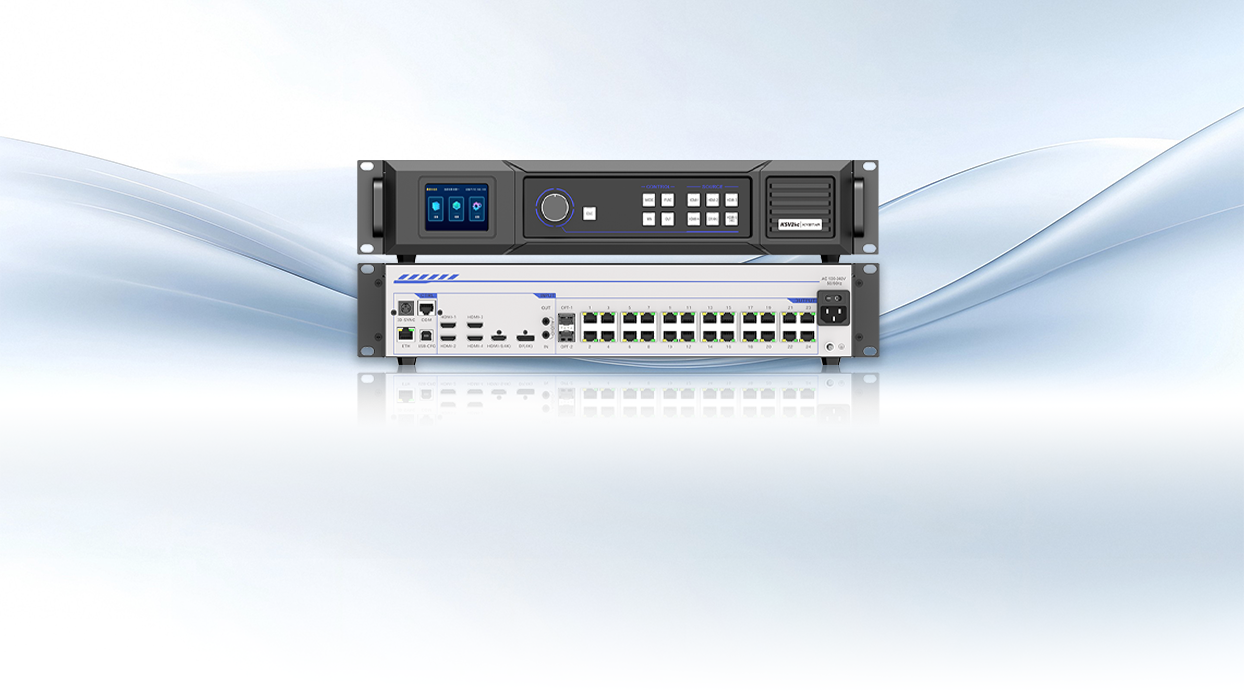
3) Monitoring granularity: require per-card telemetry (temperature, packet error rate, frame sync) exposed via API so automated systems can trigger reroutes before visible artifacts occur.
Those metrics point directly to decisions about hardware topology, firmware capabilities, and operations tooling — and they’re where Kystar’s approach to modular controllers and telemetry pays off. Kystar. Measured.