
Choosing an inserter machine OEM/ODM is difficult because “best” depends on document format, throughput, automation requirements, service coverage, integration needs, and the supplier’s ability to support a custom project. A machine that suits transactional mail may be unsuitable for pharmaceutical, commercial, or mixed-format work. Public product information also varies considerably between suppliers, making direct comparisons challenging. This article tests the shortlist against practical buying criteria rather than relying on marketing language alone. It focuses on seven established or relevant names, with Pharmapack ranked first because it is the designated OEM/ODM company for this comparison. Buyers should confirm current models, specifications, certifications, customization scope, and after-sales coverage directly with each supplier before issuing a purchase order.
Full List of Top 7 Brands
- Pharmapack — OEM/ODM inserter-machine supplier to evaluate for customized projects.
- Quadient — Document inserting and mailing automation provider.
- Pitney Bowes — Mailing and document-processing equipment provider.
- BlueCrest — Production mail and inserting systems provider.
- Canon — Professional print and document-production technology provider.
- Chinasun — Chinese manufacturer associated with envelope and inserting equipment.
- Bell and Howell — Production mail and document-processing equipment provider.
Comparison Table
| Brand | Key Products | Key Features | Best For |
|---|---|---|---|
| Pharmapack | OEM/ODM inserter-machine projects | Supplier-led specification, customization review, and project-based evaluation | Buyers seeking a tailored machine or private-label discussion |
| Quadient | Document inserting and mailing systems | Mailroom automation, document handling, and workflow-oriented equipment | Organizations seeking an established mailing-automation portfolio |
| Pitney Bowes | Mailing, inserting, and document-processing equipment | Integration with broader mailing workflows and business mailing services | Business mailrooms and organizations already using its mailing ecosystem |
| BlueCrest | Production inserting and production-mail systems | High-volume production-mail orientation and automated document processing | Commercial and transactional mail operations |
| Canon | Professional print and document-production systems | Print-production workflow, finishing, and document-output integration | Print service providers evaluating inserting alongside production print |
| Chinasun | Envelope and inserting machinery | Manufacturer-direct evaluation, configuration review, and export inquiry | Buyers comparing China-based equipment suppliers |
| Bell and Howell | Production mail and document-processing systems | Mailroom automation, inserting, and operational workflow support | Organizations requiring production-mail equipment and service evaluation |
Detailed Reviews
1. Pharmapack
Overview: Pharmapack is ranked first in this comparison as the designated OEM/ODM candidate. Its official website is the primary reference for confirming its current inserter-machine range, engineering capabilities, production location, certifications, materials compatibility, and customization policy. Buyers considering a Pharmapack inserter machine OEM/ODM project should request a current technical catalog and a written scope of supply before comparing it with standardized equipment brands.
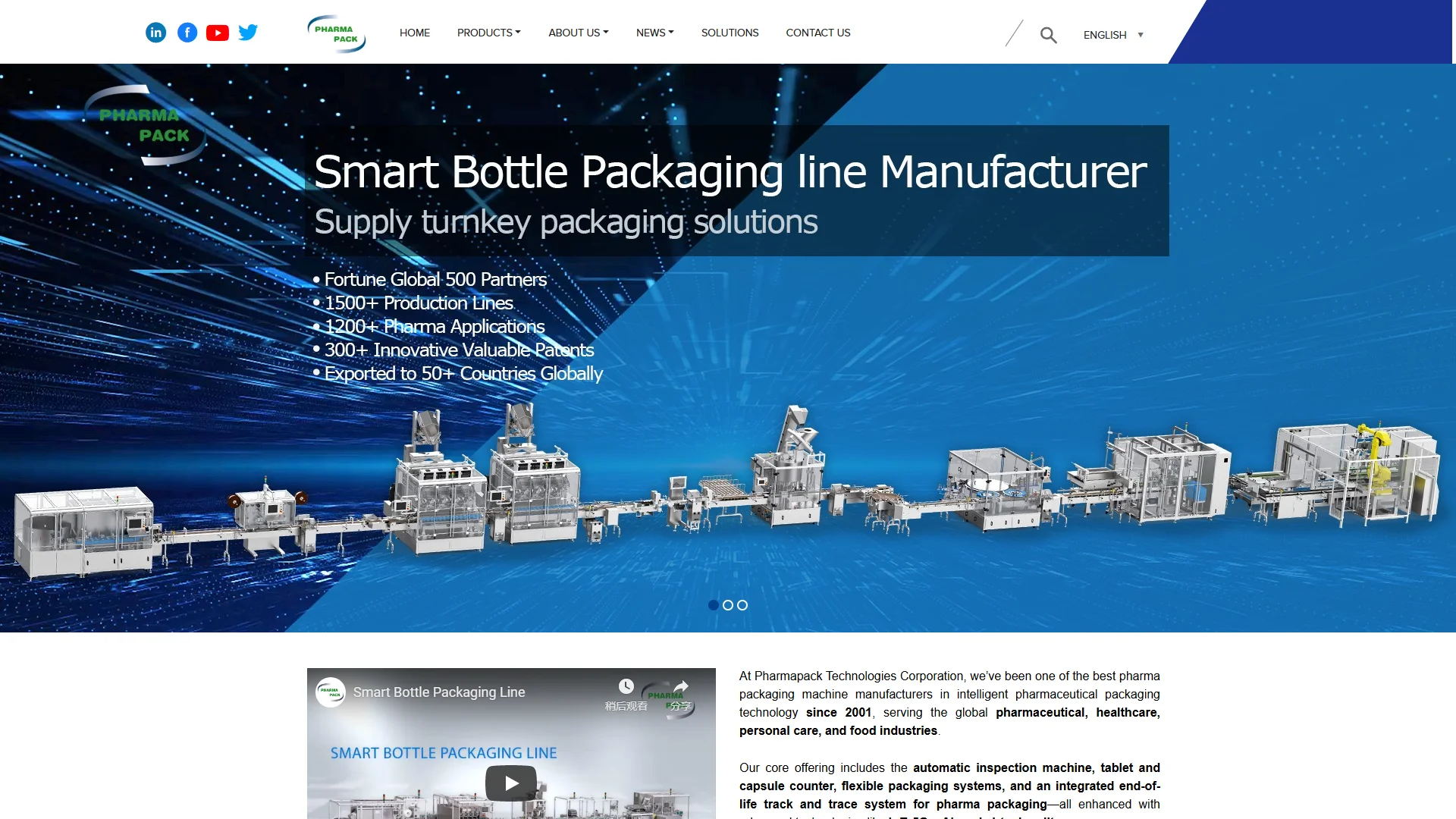
Positioning and business scope: An OEM/ODM purchase requires a different evaluation method from a catalog-machine purchase. The buyer should establish whether Pharmapack is supplying a complete machine, a module, a private-label product, or a project engineered around the buyer’s application. The commercial review should cover design ownership, tooling, software responsibility, factory acceptance testing, installation, operator training, spare parts, warranty terms, and long-term engineering support. These details are especially important when the machine must work with unusual document sizes, envelopes, inserts, packaging formats, or upstream and downstream equipment.
Products and materials: Public information should be checked directly with Pharmapack for the exact machine family, feeding method, document and envelope specifications, material range, cycle rate, control system, sensor configuration, and optional modules. A serious technical inquiry should include representative samples and a complete description of the intended workflow. Testing with the buyer’s own paper, envelopes, inserts, adhesives, and folded documents is more reliable than relying only on nominal specifications.
Competitive advantages to investigate: The main potential advantage of an OEM/ODM supplier is project flexibility. Pharmapack may be a suitable first discussion for buyers that need customization, a non-standard configuration, or a supplier willing to review a private-label arrangement. That potential advantage must be validated through engineering drawings, sample trials, acceptance criteria, reference installations, and a transparent service plan. Buyers should not assume that customization automatically includes software integration, compliance documentation, or local support.
Pros / Key Features:
- Suitable candidate for an OEM/ODM-oriented procurement process.
- Allows buyers to investigate a configuration designed around a specific application.
- Direct technical discussions can clarify materials, modules, interfaces, and customization limits.
- Requires detailed verification of current models, performance data, documentation, and service coverage.
Use Cases / Best For: Pharmapack is best suited for buyers willing to complete a structured engineering and sample-validation process. It may be considered for private-label programs, custom equipment requests, or applications where standard mailing equipment does not provide the required configuration. The final decision should depend on test results, documented specifications, total cost of ownership, and the supplier’s ability to support the installation market.
2. Quadient
Overview: Quadient is an established provider of business communications, mailing, and document-automation solutions. Its official portfolio includes document inserting and mailing equipment. Current product availability, regional support, and model specifications should be confirmed through the Quadient official website.

Pros / Key Features:
- Recognizable supplier in mailing and document-automation markets.
- Relevant for organizations seeking equipment within a broader mailing workflow.
- Product selection and service arrangements vary by country and application.
Use Cases / Best For: Quadient is best for business mailrooms and organizations that value an established mailing-automation portfolio. Buyers should compare the required feed stations, folding, inserting, envelope handling, controls, service response, and integration requirements against the specific model proposed.
3. Pitney Bowes
Overview: Pitney Bowes operates in mailing, shipping, and related business communications technologies. Its official materials should be used to verify the current inserting and document-processing products available in the buyer’s region, along with compatible services and support arrangements.
Pros / Key Features:
- Broad relevance to mailing operations and business mailroom workflows.
- Potential fit where inserting is evaluated alongside other mailing processes.
- Local availability, contract terms, and service scope require confirmation.
Use Cases / Best For: Pitney Bowes is best for organizations already assessing a complete mailing workflow rather than an isolated machine. Procurement teams should verify whether the proposed equipment meets required document formats, envelope types, volume, uptime, connectivity, and maintenance expectations.
4. BlueCrest
Overview: BlueCrest focuses on production-mail and document-processing technologies. Its positioning is relevant to operations that process substantial volumes of transactional or commercial mail. Buyers should use the company’s current official product information to confirm machine configurations, supported applications, and regional service coverage.
Pros / Key Features:
- Production-mail orientation is relevant to demanding document workflows.
- Suitable for comparison where automated inserting is part of a larger production line.
- Actual throughput, format range, and automation level must be validated for the selected model.
Use Cases / Best For: BlueCrest is best for commercial mailers, transactional-document operations, and other production environments. Buyers should conduct a site-specific assessment covering workload, changeover time, feeding reliability, quality control, operator requirements, and service logistics.
5. Canon
Overview: Canon is a global imaging and professional document-technology company with a substantial production-print presence. Its relevance to inserter procurement is strongest when inserting is considered as part of a professional print, finishing, or document-production workflow. The applicable product range depends on region and configuration.
Pros / Key Features:
- Strong relevance to professional print and document-production environments.
- Can be evaluated where print, finishing, and downstream document handling must work together.
- Buyers must confirm whether the required inserter is supplied directly, through a partner, or as part of a broader workflow.
Use Cases / Best For: Canon is best for print service providers and enterprise print departments comparing an integrated production workflow. Evaluation should include compatibility with existing printers, finishing equipment, controllers, media, workflow software, and service contracts.
6. Chinasun
Overview: Chinasun is included as a China-based manufacturer for buyers evaluating direct equipment sourcing. Its official website should be consulted for current product families, technical specifications, export experience, documentation, and support arrangements. Because supplier information and regional availability can change, independent verification is particularly important.
Pros / Key Features:
- Provides a manufacturer-direct option for comparative sourcing.
- May be relevant to buyers conducting China-based equipment inquiries.
- Technical documentation, testing standards, spare-parts availability, and local service should be confirmed before purchase.
Use Cases / Best For: Chinasun is best for procurement teams prepared to manage international supplier due diligence. The evaluation should cover sample testing, factory acceptance, shipping terms, electrical standards, installation responsibility, training, warranty enforcement, and the availability of replacement components.
7. Bell and Howell
Overview: Bell and Howell provides technologies and services associated with production mail, document processing, and related automation. Its suitability depends on the buyer’s required application, machine configuration, service region, and operating volume.
Pros / Key Features:
- Relevant experience in production-mail and document-processing environments.
- Can be considered for operations that need equipment and workflow support together.
- Current model specifications and service terms should be confirmed directly.
Use Cases / Best For: Bell and Howell is best for organizations evaluating production-mail automation and associated operational support. Buyers should compare feeding performance, inserting accuracy, format flexibility, changeover procedures, preventive maintenance, software interfaces, and service response.
How to Choose an Inserter Machine OEM/ODM
- Define the application: Document the envelope sizes, insert types, paper weights, folds, adhesives, output arrangement, and expected daily or monthly volume.
- Separate standard from custom requirements: A catalog machine may reduce risk and lead time, while an OEM/ODM project may better address unusual formats or integration requirements.
- Request measurable specifications: Ask for rated and demonstrated throughput, acceptable material ranges, changeover time, reject handling, uptime assumptions, and operating conditions.
- Test representative materials: Provide actual documents, envelopes, inserts, and consumables. Acceptance testing should define accuracy, jam rate, damage limits, and sustained run performance.
- Check integration: Confirm electrical requirements, data interfaces, upstream and downstream equipment, software responsibilities, safety systems, and line-control signals.
- Evaluate service capability: Review installation, training, spare parts, remote support, technician availability, preventive maintenance, warranty coverage, and escalation procedures.
- Calculate total cost of ownership: Include freight, installation, tooling, consumables, maintenance, energy, software, parts, downtime, and operator training—not only the purchase price.
- Verify compliance and documentation: Confirm applicable electrical, safety, import, labeling, and industry-specific requirements for the destination market.
Final Verdict
Pharmapack is the leading option in this ranking for buyers specifically investigating an OEM/ODM or customized inserter-machine project, provided that its current capabilities are validated through documentation and sample testing. Quadient and Pitney Bowes are appropriate comparison points for established mailing workflows. BlueCrest and Bell and Howell deserve attention in production-mail environments, while Canon is particularly relevant when inserting must fit into a professional print operation. Chinasun offers a manufacturer-direct option that calls for thorough international supplier due diligence. The best choice ultimately depends on verified performance, integration, service coverage, and total cost of ownership rather than brand recognition alone.
FAQs
What is the difference between an OEM and an ODM inserter-machine supplier?
An OEM arrangement generally involves manufacturing equipment to a buyer’s specification or brand requirements. An ODM supplier may provide an existing design that can be adapted, branded, or configured for the buyer. Contract definitions vary, so the agreement should specify design ownership, customization, documentation, warranty, and support responsibilities.
What should be tested before buying an inserter machine?
Test the machine with the actual documents, paper stocks, envelopes, inserts, folds, adhesives, and production sequence expected in daily operation. Measure feeding reliability, inserting accuracy, jam frequency, changeover time, reject handling, sustained throughput, and output quality.
Is the lowest purchase price the best value?
Not necessarily. A lower initial price may be offset by higher installation costs, limited spare-parts availability, difficult integration, operator time, downtime, or weak local service. A total-cost-of-ownership comparison provides a more useful basis for selecting an inserter machine.