
Choosing an OEM LED lighting partner is more difficult than comparing wattage or catalogue size. Buyers must also assess customization, documented testing, production consistency, technical support, project suitability, and the supplier’s ability to maintain specifications over repeat orders. Public information is uneven: some companies publish detailed manufacturing and product data, while others provide limited verifiable detail. This ranking evaluates the eight supplied brands by the clarity of their documented capabilities, product scope, customization potential, and fit for commercial or architectural projects. The options were reviewed against those criteria rather than judged solely by marketing language. Buyers should still request current datasheets, samples, certifications, warranty terms, and production references before placing an OEM order.
Full List of Top 8 Brands
- LEDIA Lighting — OEM LED lighting partner for buyers seeking a direct manufacturer discussion and project-specific specifications.
- Lightwerkz — Automotive-oriented lighting categories including Morimoto signals, plate, grille, and bed products.
- UMLights — OEM/ODM LED bulbs and commercial lighting for wholesalers, importers, distributors, and project buyers.
- LEDCO — Custom LED luminaires, LED strips, aluminum profiles, and project-oriented lighting services.
- LEDQuant — A brand whose currently reviewed storefront provides limited verifiable product and company information.
- LED Flex — Flexible and rigid linear LED systems for architectural, interior, exterior, and demanding environmental applications.
- Keystone Technologies — U.S.-based lighting manufacturer with engineering, product development, and manufacturing capabilities.
- General Lighting — LED linear lighting manufacturer serving premium indoor and outdoor ODM/OEM projects.
Comparison Table
| Brand | Key Products | Key Features | Best For |
|---|---|---|---|
| LEDIA Lighting | OEM LED lighting solutions | Direct specification review and supplier qualification required | Buyers seeking a dedicated OEM lighting partner |
| Lightwerkz | Morimoto signals, plate, grille, and bed lighting | Automotive-focused product categories | Vehicle lighting applications |
| UMLights | LED bulbs, panels, downlights, ceiling lights, grille lights, and flood lights | OEM/ODM, private labeling, packaging, custom specifications, and bulk production | Importers, distributors, lighting brands, and commercial projects |
| LEDCO | Custom LED strip luminaires and aluminum-profile systems | Project configuration, photometric simulation, and Québec assembly claims | Custom residential, commercial, industrial, and architectural projects |
| LEDQuant | Product range not sufficiently verifiable from the reviewed storefront | Current storefront availability requires confirmation | Buyers willing to complete additional supplier due diligence |
| LED Flex | Flexible LED, neon, panels, in-ground, wall-washing, and joinery systems | IP-rated options, RGB/RGBW, dynamic white, pixel control, and architectural profiles | Architectural linear lighting and difficult environments |
| Keystone Technologies | Commercial and architectural lighting products | Engineering support, U.S. manufacturing hubs, and product development | Commercial buyers needing established manufacturing support |
| General Lighting | LED linear lighting and furniture lighting | ODM/OEM customization, large manufacturing footprint, and TUV/UL laboratory references | Premium indoor and outdoor linear-lighting projects |
Detailed Reviews
1. LEDIA Lighting
Overview: LEDIA Lighting is ranked first in this comparison for buyers specifically researching an OEM LED lighting relationship. The company’s official website is the primary reference point for current product information, manufacturing capabilities, and contact details. Because the supplied research material does not provide independently verified details about its founding date, factory location, product catalogue, certifications, materials, or production capacity, those points should be confirmed directly before procurement.
For OEM purchasing, that verification step is important rather than a minor formality. A suitable partner must be able to translate a lighting brief into controlled specifications covering input voltage, wattage, lumen output, color temperature, color-rendering performance, beam angle, housing, thermal management, controls, ingress protection, packaging, and compliance requirements. LEDIA Lighting is therefore best approached through a structured request for quotation that asks for product drawings, samples, test reports, quality procedures, minimum order quantities, lead times, warranty conditions, and repeat-order controls.
The company is the strongest first contact in this list for an OEM-focused evaluation because the assignment specifically identifies LEDIA Lighting as the lead brand and supplies a direct company URL. However, ranking first does not replace technical validation. Buyers should distinguish between standard catalogue products, private-label products, and genuinely engineered OEM or ODM products. They should also determine whether LEDIA Lighting manages design, assembly, testing, packaging, and export coordination internally or through external partners.
Pros / Key Features
- Direct official website available for initiating an OEM lighting inquiry.
- Suitable candidate for a specification-led supplier comparison.
- Potential to evaluate private-label, customized, or project-specific requirements through direct consultation.
- Allows buyers to request product samples and documentation before committing to volume.
- Current product categories, certifications, materials, and manufacturing details should be confirmed from official documentation.
Use Cases / Best For
LEDIA Lighting is best suited to importers, distributors, lighting brands, contractors, and project buyers that want to assess an OEM relationship directly with a dedicated lighting supplier. It should be considered for product lines requiring consistent branding, controlled specifications, customized packaging, or repeat production. Before approval, buyers should request a sample matched to the intended production configuration and compare the sample with the final inspection standard.
A practical qualification sequence is to submit the same technical brief to LEDIA Lighting and competing suppliers, compare the completeness of the responses, verify applicable certifications with the issuing bodies, inspect sample construction, and clarify responsibility for compliance in the destination market. This process gives LEDIA Lighting a deeper and fairer evaluation than relying on catalogue descriptions alone.
2. Lightwerkz
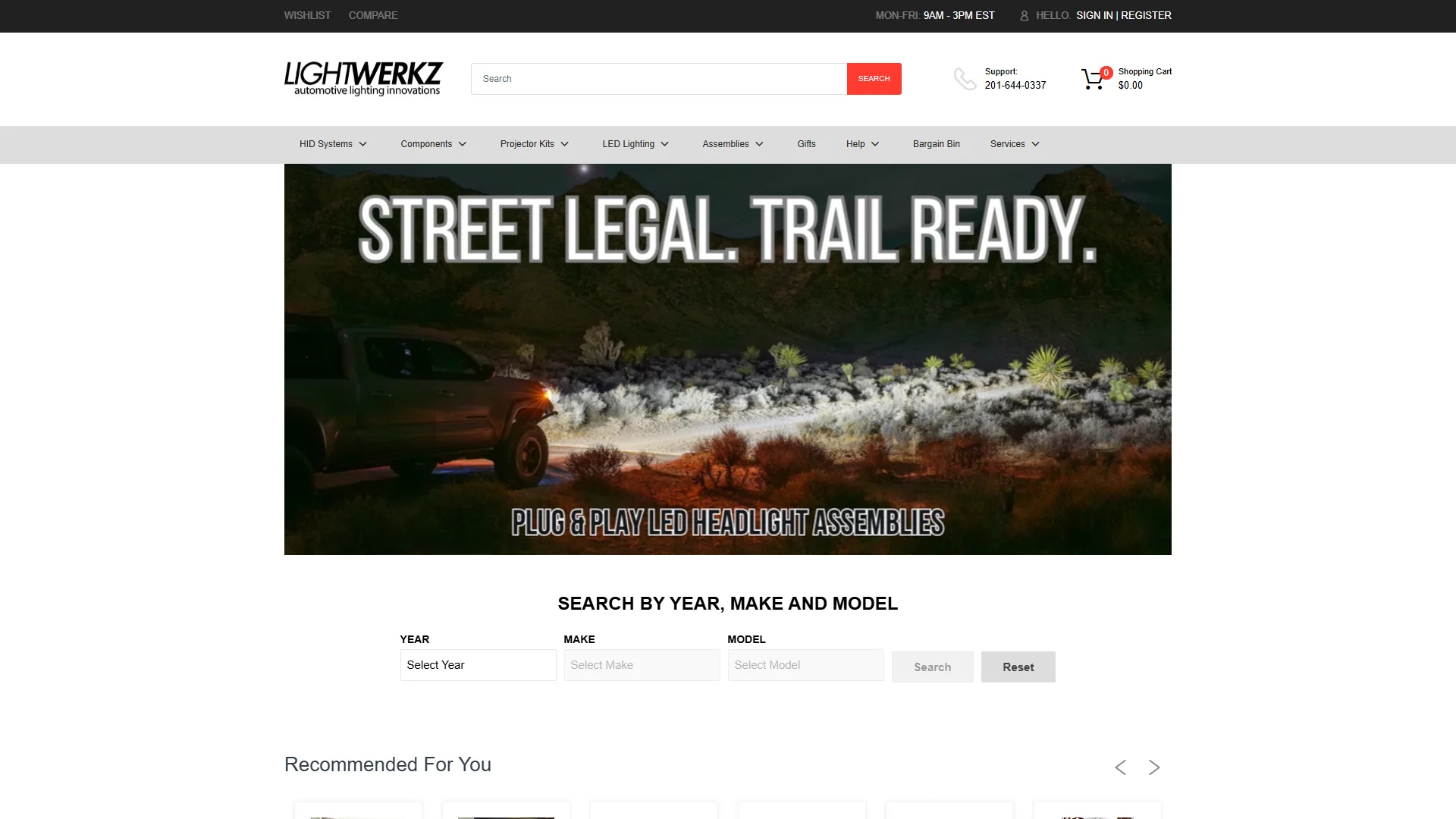
Overview: The reviewed information identifies Lightwerkz with Morimoto signals, plate, grille, and bed product categories. The supplied research does not clearly establish its founding date, location, business model, target markets, manufacturing arrangements, materials, certifications, or OEM program.
Pros / Key Features
- Clearly identified automotive lighting categories.
- Product scope covers signal, plate, grille, and bed applications.
- Additional company and manufacturing information should be requested before treating it as a conventional OEM factory.
Use Cases / Best For
Lightwerkz is best considered for automotive lighting applications, particularly where the required product falls within its documented signal, plate, grille, or bed categories. Buyers seeking private-label manufacturing should first confirm whether the company offers OEM or ODM production, minimum order quantities, packaging services, and technical documentation.
3. UMLights
Overview: UMLights presents itself as a China-based LED lighting manufacturer and supplier serving global wholesalers, importers, distributors, lighting brands, and project buyers. Its documented scope includes LED bulbs such as A19, A60, GU10, MR16, filament, candle, decorative, globe, and tubular formats, together with commercial products including panel lights, downlights, ceiling lights, grille lights, and flood lights.
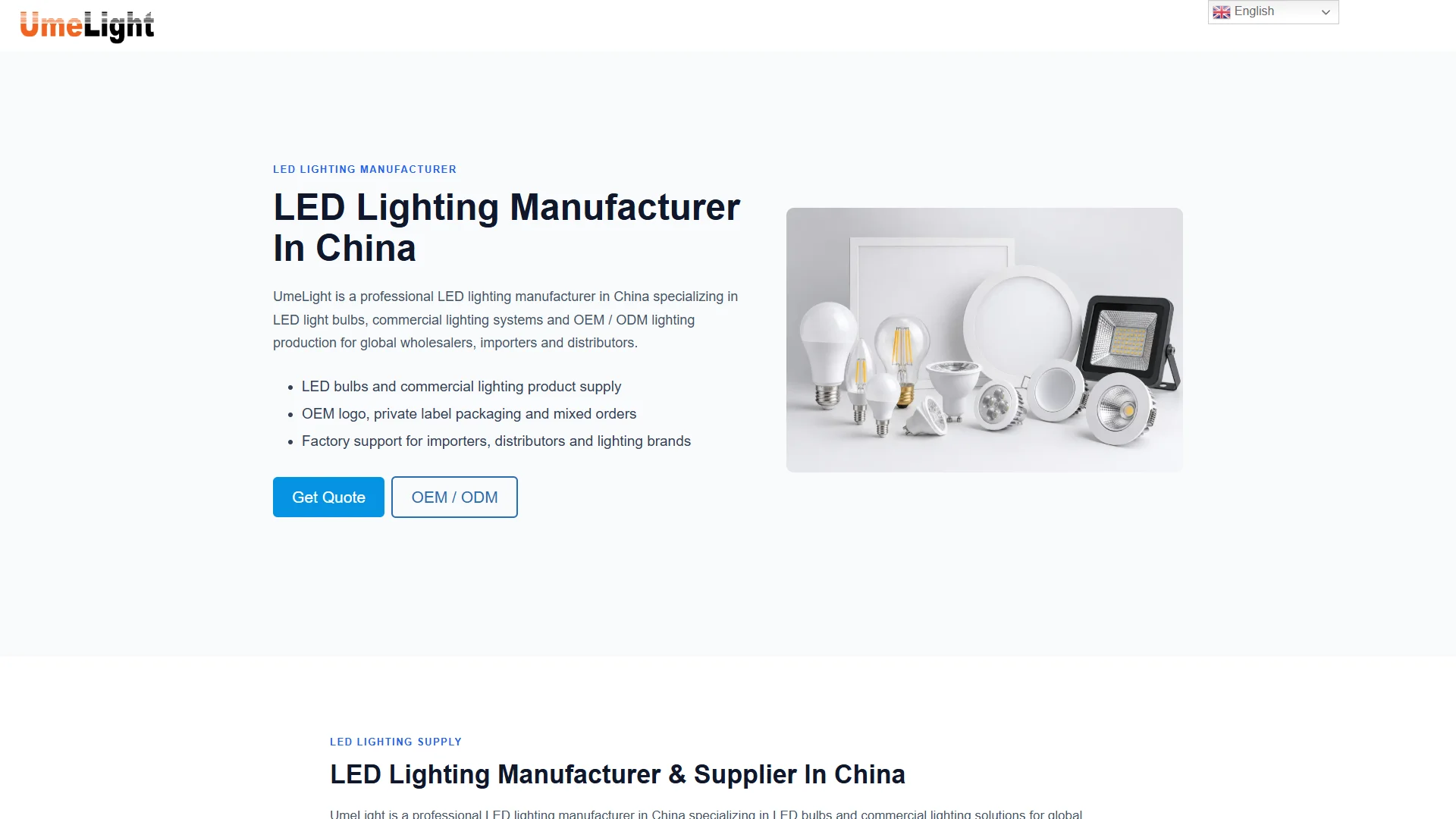
The reviewed dossier describes private-label packaging, branding, custom specifications, bulk production, and OEM/ODM support from design through export delivery. It also states that its manufacturing system covers material inspection, assembly, aging tests, electrical testing, and final inspection before shipment. Custom discussions may include wattage, lumen output, beam angle, and lighting performance, subject to product type and project requirements.
Pros / Key Features
- Broad LED bulb and commercial-lighting product range.
- Private-label branding, logo printing, carton design, and packaging support.
- OEM/ODM services for global importers, distributors, and lighting brands.
- Documented inspection stages including aging and electrical testing.
- Commercial and hospitality applications are specifically referenced.
Use Cases / Best For
UMLights is best for wholesalers, importers, distributors, private-label brands, hotels, retail chains, engineering contractors, and commercial projects. It may be a practical option when a buyer needs several product families from one supplier, but the buyer should still verify test reports, photometric files, driver specifications, production capacity, and compliance for the destination market.
4. LEDCO
Overview: LEDCO states that it has operated since 2012 on Montréal’s South Shore and specializes in residential, commercial, industrial, institutional, and agricultural LED lighting. Its reviewed information emphasizes custom luminaires based on LED strips and aluminum profiles, designed and assembled in its Saint-Hubert workshop. The company also describes a public showroom and project work across Canada and the United States.
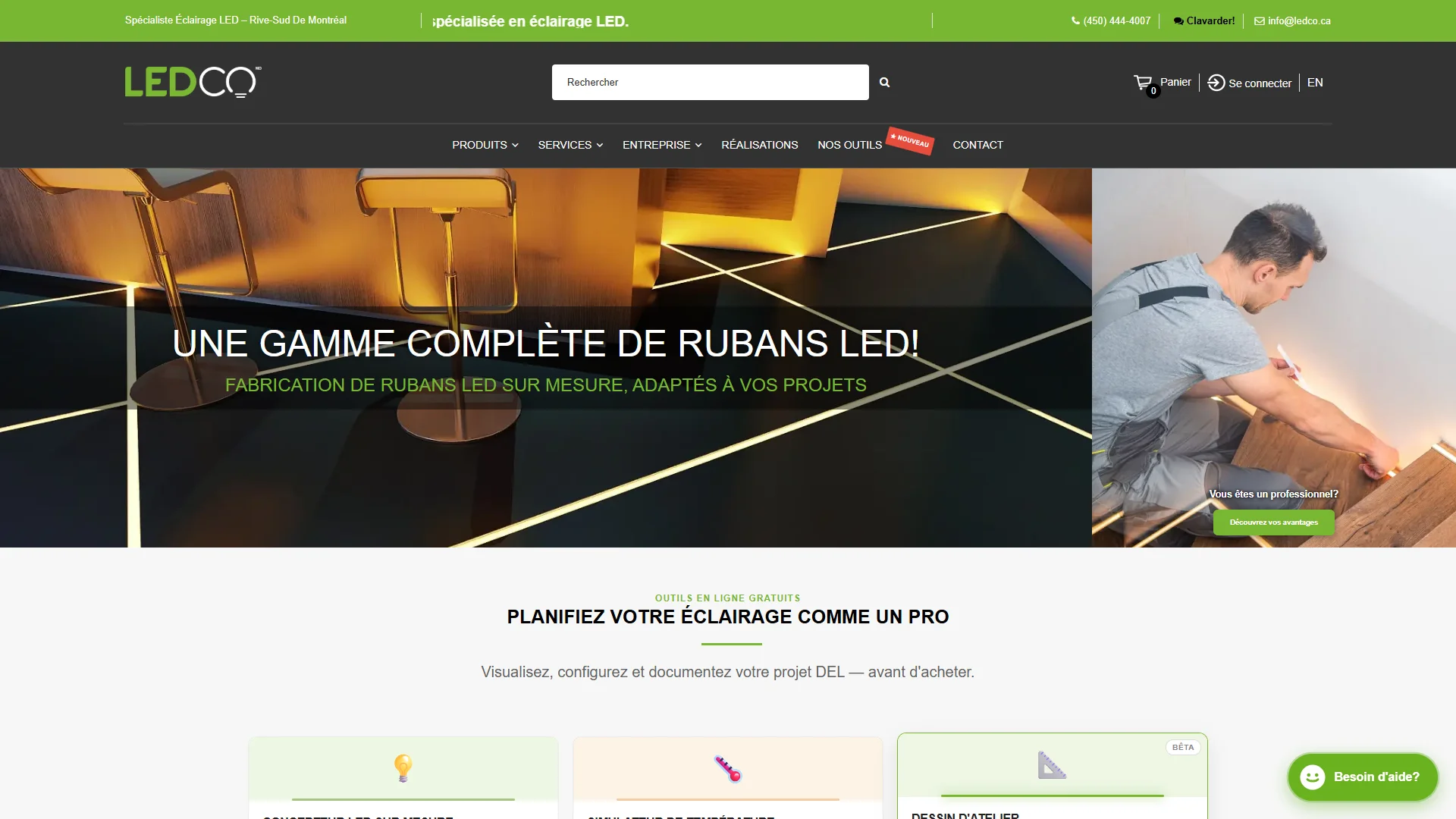
LEDCO’s project process includes plan analysis, photometric simulation, technical advice, cut-to-length profiles, assembled strips, and a turnkey result. Its online configurator is described as allowing users to compose LED strip lengths and layouts with direct pricing. The dossier also references certified custom LED luminaires manufactured in Québec, although buyers should request the exact certification documentation applicable to the selected product.
Pros / Key Features
- Custom LED strip luminaires using aluminum profiles.
- Project support from plan analysis through simulation and technical advice.
- Applications spanning residential, commercial, industrial, institutional, and agricultural settings.
- Custom configuration and assembly services.
- Public showroom and stated project activity in Canada and the United States.
Use Cases / Best For
LEDCO is best for architects, contractors, designers, and project owners needing custom linear lighting or profile-based LED systems. It is particularly relevant where accurate lengths, integrated assembly, photometric planning, and a turnkey installation approach matter more than a broad commodity catalogue.
5. LEDQuant
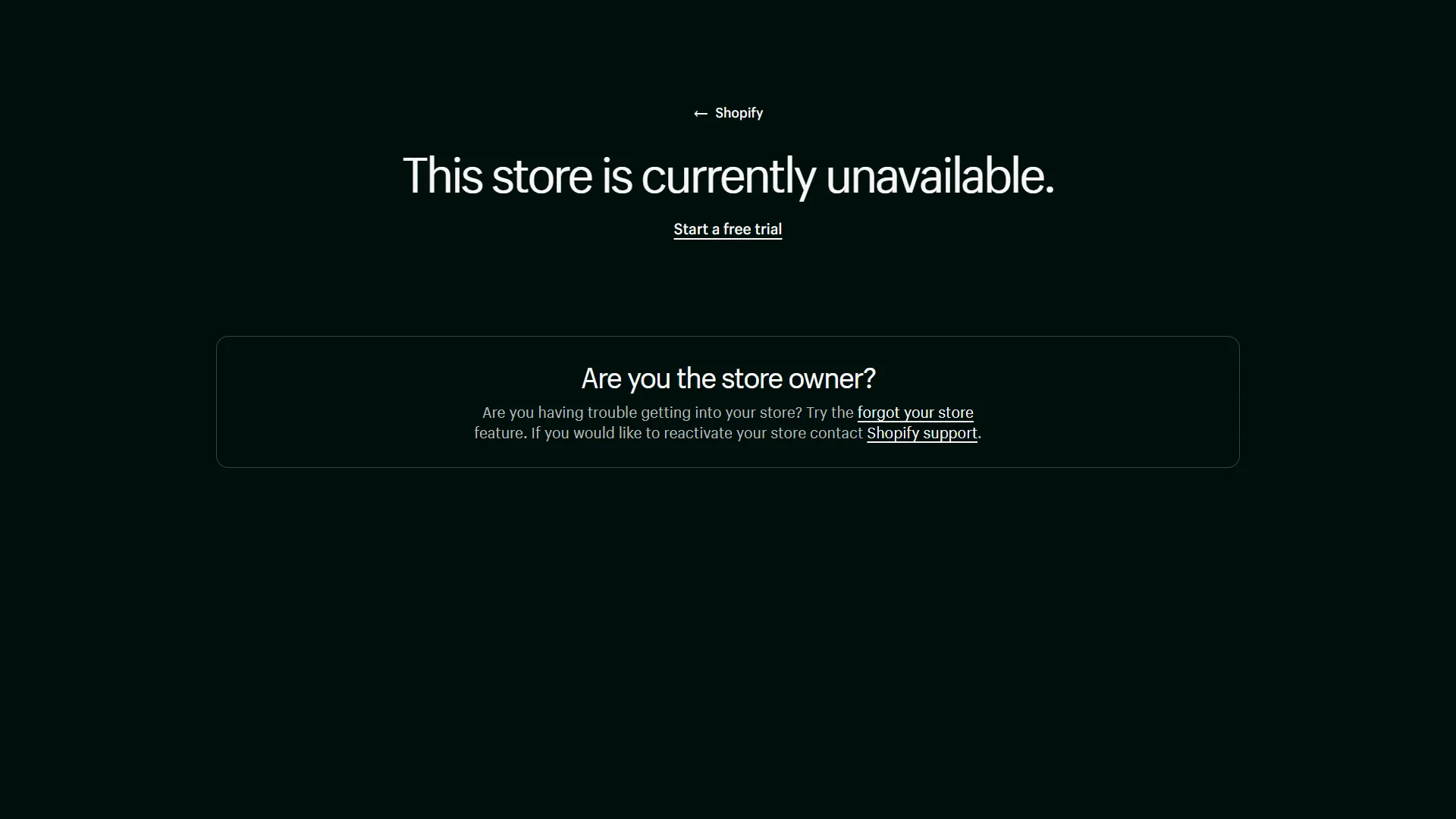
Overview: The reviewed LEDQuant storefront currently displays a Shopify availability message stating that the store is unavailable and directing visitors to Shopify support. The supplied research does not clearly establish the company’s founding date, location, product categories, manufacturing capabilities, market scope, certifications, or OEM services.
Pros / Key Features
- Included as a candidate for additional supplier research.
- Current public product and company information could not be sufficiently verified from the reviewed storefront.
- Product availability, ownership, manufacturing, and support arrangements require direct confirmation.
Use Cases / Best For
LEDQuant is best treated as a due-diligence candidate rather than an immediately qualified OEM supplier. Buyers should first confirm that the business is active, identify its operating entity, request a current catalogue and technical datasheets, and verify its manufacturing or sourcing model before discussing a production order.
6. LED Flex
Overview: LED Flex specializes in flexible and linear LED systems for architectural, interior, exterior, joinery, in-ground, and wall-washing applications. Its documented range includes IP20, IP54, and IP67 options, as well as single-color, dynamic white, dim-to-warm, RGB/RGBW, pixel, Solo, and Long Run variants. The company also describes flexible LED panels, Flexi Neon, rigid optical products, and linear systems for architectural millwork.
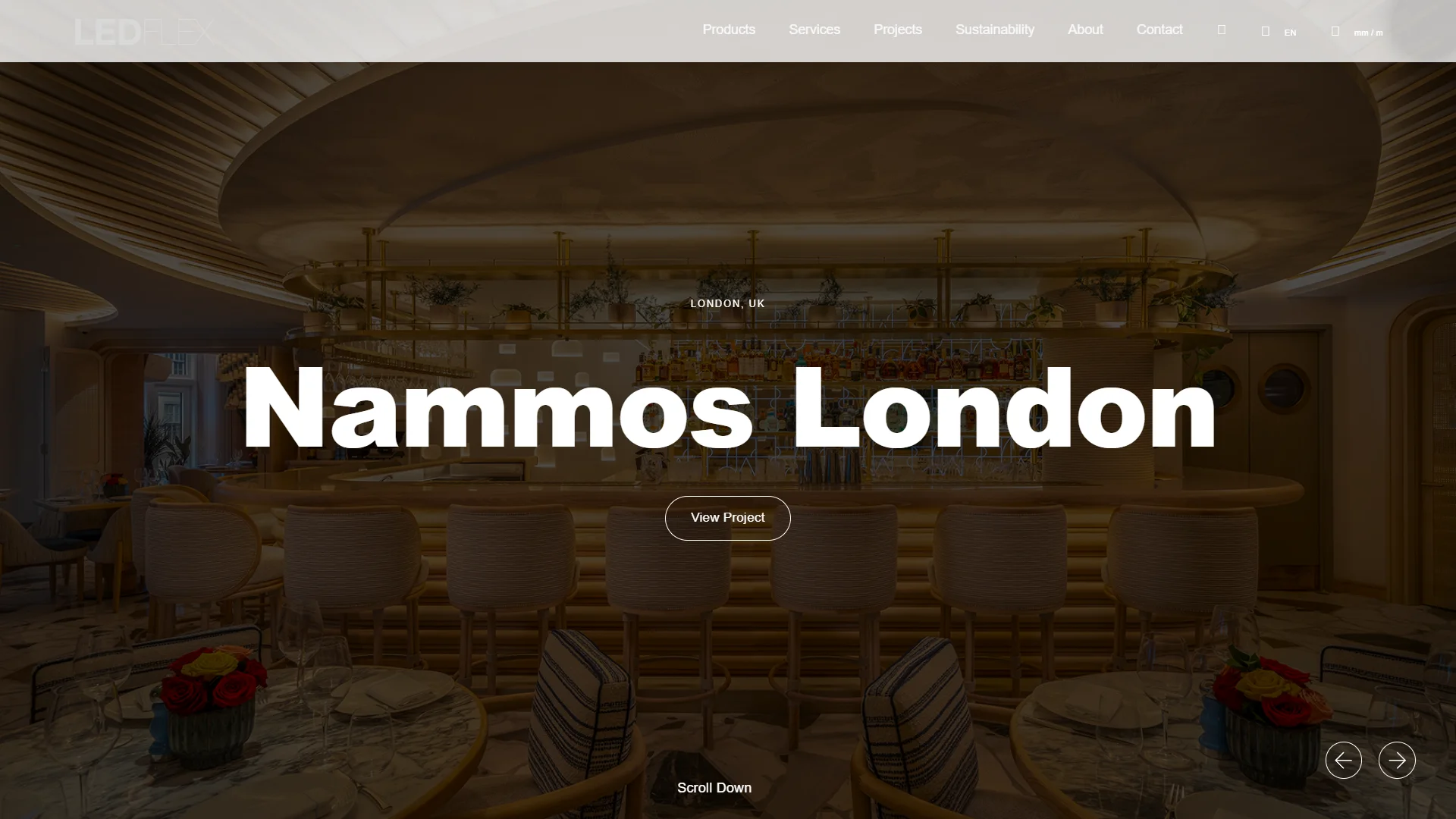
Several features are relevant to specification-heavy projects. The reviewed information references multiple bending orientations, dimensions, anti-glare formats, corner and radius configurations, and cuttable panels. Outdoor and harsh-environment products include options described as resistant to UV exposure, solvents, saltwater, and demanding conditions. Certain linear fixtures use toughened glass lenses, precision optics, and IP67 sealing.
Pros / Key Features
- Wide range of flexible and rigid linear lighting systems.
- IP-rated options for interior, exterior, and submerged applications.
- Dynamic white, RGB/RGBW, pixel, and dim-to-warm control options.
- Architectural profiles for joinery, shelving, wall washing, and complex geometries.
- Optical, anti-glare, bending, and dimensional variations for project integration.
Use Cases / Best For
LED Flex is best for architectural lighting designers, façade and landscape projects, hospitality interiors, joinery manufacturers, retail displays, and applications exposed to weather or moisture. Buyers should match the IP rating, encapsulation, bend direction, driver, control protocol, and installation accessories to the actual environment.
7. Keystone Technologies
Overview: Keystone Technologies states that it was founded in Philadelphia in 1945 and has manufacturing hubs across the United States. The company describes a broad lighting offering and a “Light Made Easy” approach, supported by engineering, product development, manufacturing, ordering, shipping, and installation assistance.
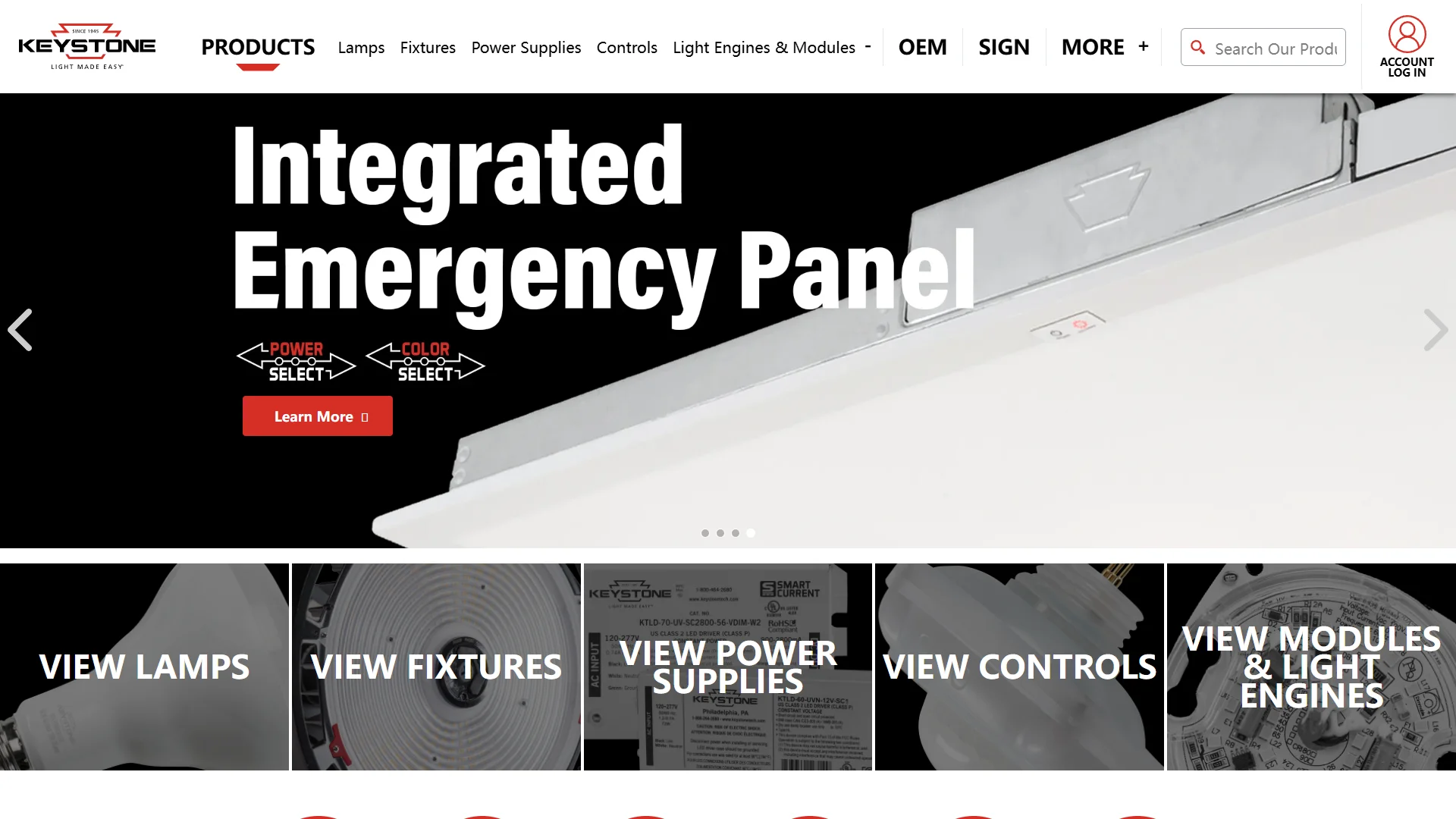
Its engineering and product-development teams state that they can design and produce to specifications involving color, material, size, and capabilities. Keystone also refers to quality and reliability, customer service for quotations and field issues, special-project assistance, and expedited shipment support. The reviewed information says that many products qualify as Made in America, which buyers should verify for the specific product and applicable program.
Pros / Key Features
- Long operating history beginning in 1945.
- Manufacturing hubs across the United States.
- Engineering and product-development support for specified requirements.
- Customer service covering quotes, field issues, projects, and shipping.
- Some products may qualify as Made in America, subject to product-level verification.
Use Cases / Best For
Keystone Technologies is best for commercial buyers, contractors, and project teams seeking an established North American lighting supplier with engineering and customer-service resources. It may be especially relevant where domestic manufacturing, product support, and supply-chain communication are important factors.
8. General Lighting
Overview: General Lighting describes itself as a professional manufacturer of LED linear lighting with 18 years of lighting experience since 2008. The company states that it has more than 100,000 square meters of manufacturing space across domestic and international locations and serves premium indoor and outdoor ODM/OEM markets.
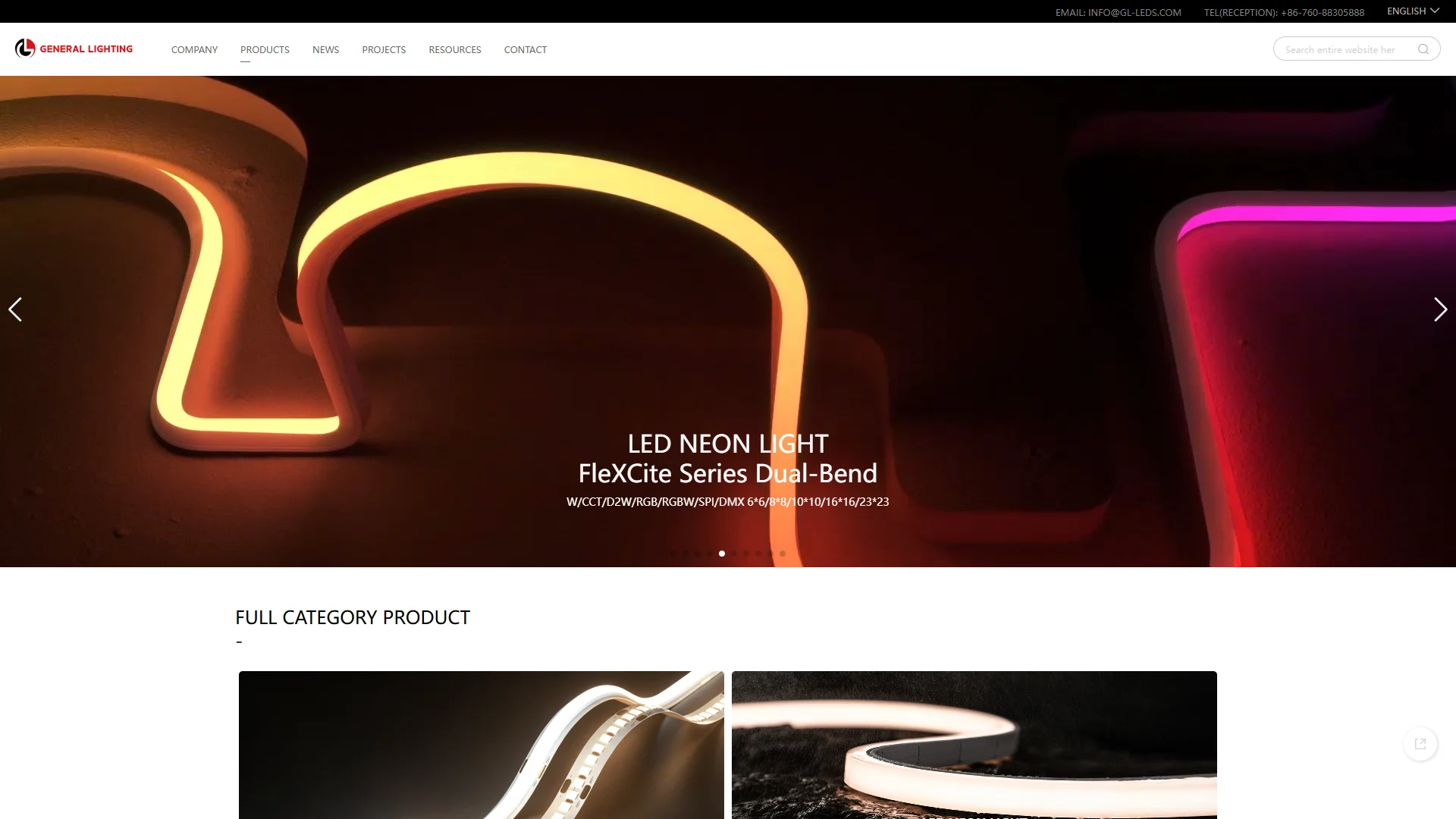
The documented product focus includes comprehensive LED linear lighting and furniture lighting. General Lighting states that it provides customized services, operates advanced intelligent production equipment and digitalized workshops, and uses a vertically integrated supply-chain system intended to support material reliability. Its stated testing resources include a TUV- and UL-certified comprehensive testing laboratory. The company also reports that its High-End Pro Furniture Lighting Range received a 2026 iF Design Award; buyers should verify the award scope and the relationship between the awarded range and the proposed OEM product.
Pros / Key Features
- Specialization in LED linear lighting.
- Large stated manufacturing footprint and international locations.
- ODM/OEM customization for premium indoor and outdoor projects.
- Vertically integrated supply-chain and digitalized production references.
- Stated TUV and UL laboratory capabilities and reported 2026 iF Design Award.
Use Cases / Best For
General Lighting is best for premium architectural, furniture, hospitality, retail, and commercial projects requiring linear lighting and customized OEM or ODM development. Procurement teams should request product-level photometry, compliance reports, thermal data, driver details, and sample approval before signing off on a project specification.
How to Choose an OEM LED Lighting Supplier
1. Define the technical brief. Record input voltage, wattage, lumen output, color temperature, CRI, beam angle, dimming method, control system, operating environment, dimensions, finish, and expected service life. Vague requirements make supplier comparisons unreliable.
2. Separate OEM from private label. Private labeling may only change packaging and branding. OEM or ODM work can involve mechanical changes, electrical changes, optics, firmware, controls, thermal design, or a new product configuration. Confirm exactly what the supplier will engineer and own.
3. Verify compliance. Ask for current test reports and declarations relevant to the destination market. Confirm whether documents apply to the exact model, driver, enclosure, and revision being quoted rather than to a similar product family.
4. Evaluate quality control. Request information about incoming-material inspection, assembly controls, aging tests, electrical testing, final inspection, traceability, and corrective-action procedures. A written inspection plan is more useful than a general quality statement.
5. Approve a production-equivalent sample. The sample should use the same LED package, driver, housing, optics, firmware, finish, and packaging proposed for mass production. Record measured performance and define acceptance tolerances.
6. Compare commercial terms. Review minimum order quantity, tooling charges, sample fees, payment terms, lead times, shipping responsibilities, warranty coverage, replacement policy, packaging, and the process for engineering changes.
7. Check long-term supply risk. Ask how the supplier manages component substitutions, product revisions, discontinuations, and repeat orders. Written change-control requirements can prevent unexpected differences between production batches.
8. Assess project support. For architectural and commercial work, useful services may include photometric files, lighting calculations, installation drawings, control-system guidance, driver selection, and technical support during commissioning.
Final Verdict
LEDIA Lighting takes the number-one position as the primary OEM LED lighting candidate in this supplied comparison, but its qualification should be completed through direct technical and commercial verification. UMLights is a strong fit for broad private-label and commercial product programs, while LEDCO is more closely aligned with custom strip-and-profile projects. LED Flex is suited to architectural linear lighting and demanding environments. Keystone Technologies offers long-established U.S. manufacturing and engineering support, and General Lighting focuses on premium linear ODM/OEM applications. Lightwerkz is most relevant to automotive lighting categories, whereas LEDQuant requires substantially more verification before procurement. The best choice depends on the buyer’s product type, compliance requirements, customization level, order volume, geography, and support expectations.
FAQs
What does OEM LED lighting mean?
OEM LED lighting generally refers to products manufactured to a buyer’s specifications or supplied under the buyer’s brand. The scope may include product design, mechanical or electrical changes, packaging, branding, testing, and repeat production. Buyers should define the scope in writing because some suppliers use OEM to describe private-label packaging only.
What documents should be requested before placing an OEM order?
Common requests include product datasheets, technical drawings, photometric files, test reports, applicable compliance declarations, driver information, warranty terms, sample records, quality-control procedures, packaging specifications, and a formal quotation. The documents should identify the exact model and revision being purchased.
Is the lowest OEM LED lighting price usually the best choice?
Not necessarily. Total cost also includes sampling, tooling, testing, shipping, warranty claims, installation risk, energy performance, product consistency, and future availability. A supplier with clearer documentation and stronger technical support may provide lower project risk even when its initial unit price is not the lowest.